The Fascinating History of the Notary Public
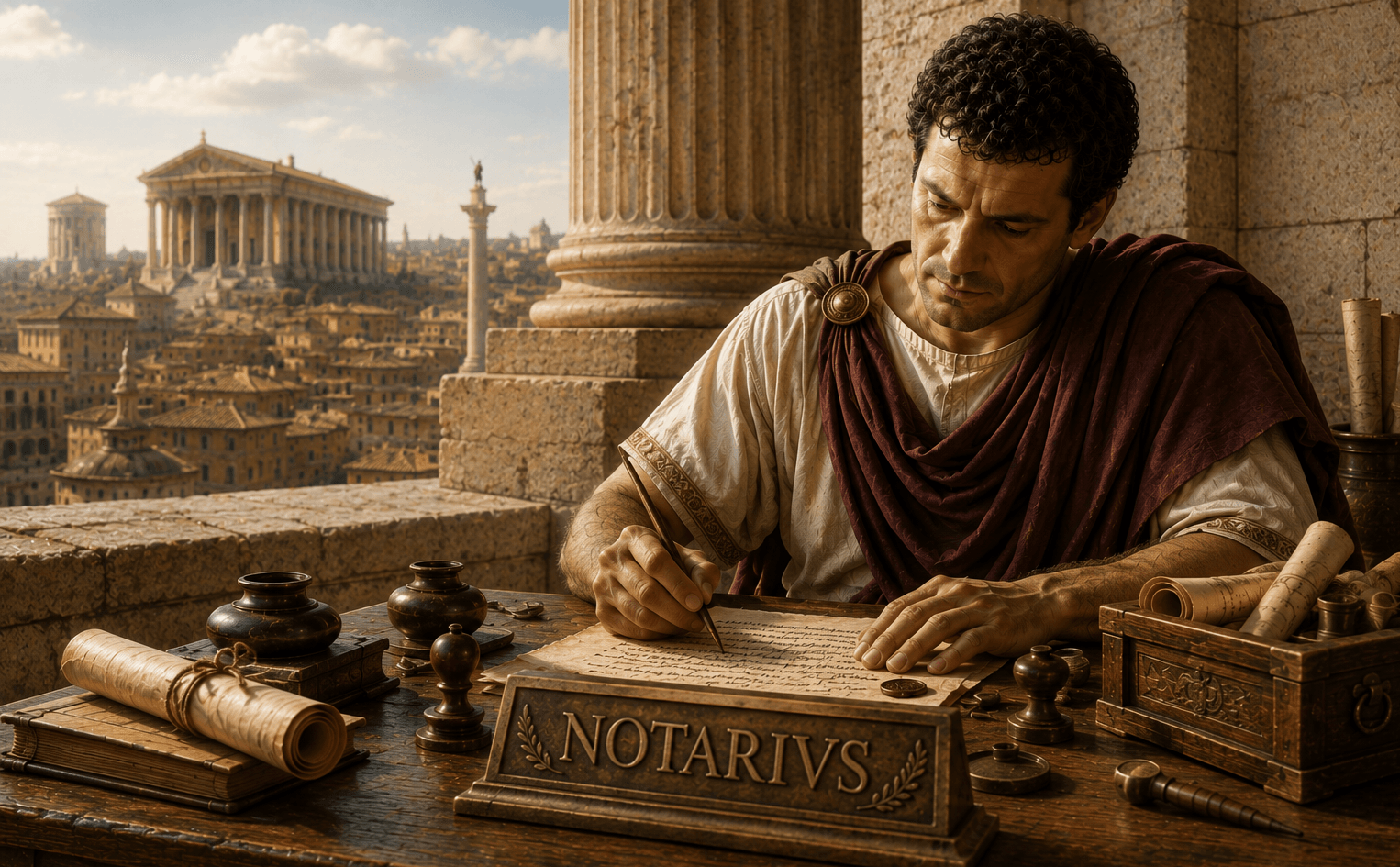
Long before stamps, seals and mobile appointments, notaries were helping people document important events and transactions. Their story stretches back thousands of years — all the way to ancient Rome.
The Fascinating History of the Notary Public
Long before stamps, seals and mobile appointments, notaries were helping people document important events and transactions. Their story stretches back thousands of years — all the way to ancient Rome.
From Ancient Rome to the Notary Public
A profession with roots stretching back nearly 2,000 years
The roots of the notary profession reach back to ancient Rome. Roman scribes known as notarii recorded speeches, proceedings and other important information, often using a form of shorthand. Other professional scribes and document writers prepared legal and private documents for citizens. Over time, these record-keeping and document-preparation roles helped shape the institution that eventually developed into the modern notary public.
From Rome to Medieval Europe
Notaries become trusted figures in law and commerce
After the fall of the Western Roman Empire, notarial traditions continued and developed throughout Europe. During the Middle Ages, notaries became increasingly important in documenting agreements, property transactions, wills and other matters requiring a reliable written record. In many parts of continental Europe, notaries developed into highly trained legal professionals whose authenticated documents could carry significant legal authority. Their exact duties varied by place and period, but the importance of trustworthy written records continued to grow.

The Notary Crosses the Atlantic
How the notary developed in England and America
The role of the notary developed differently in England than it did in much of continental Europe. English notaries generally had a more limited role, particularly as the common-law legal system developed its own traditions for handling documents and transactions.
That English tradition crossed the Atlantic to America. In the United States, notaries public generally became officials authorized under state law to perform specific notarial acts. Their duties vary by state and may include administering oaths, taking acknowledgments and verifying the identity of people signing certain documents. Unlike notaries in some other countries, a U.S. Notary Public is generally not the same as an attorney and does not automatically have authority to provide legal advice.
The Notary Public Comes to California
From the Gold Rush era to today
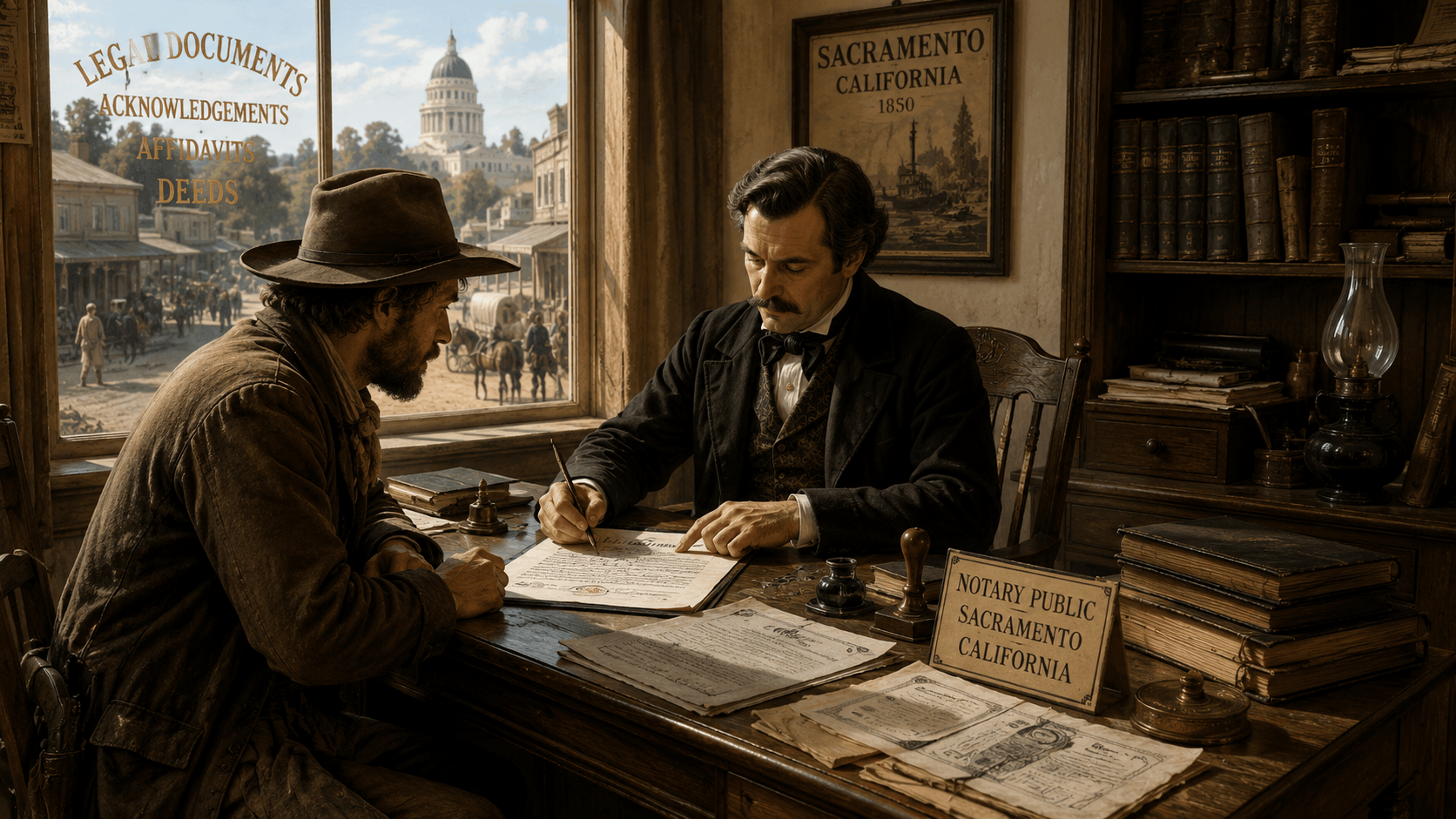
As California grew rapidly during and after the Gold Rush, reliable written records became increasingly important for property, business and other transactions. Today, California Notaries Public are commissioned by the California Secretary of State and perform specific notarial acts under state law. Although the tools have changed—from handwritten records and wax seals to identification documents, journals and modern notarial certificates—the need for trustworthy, impartial notarization remains. And in Sacramento, today's notary can do something those early Californians might have appreciated: come directly to you.
From Ancient Scrolls to Mobile Notaries
The tools changed. The need for trusted notarization didn't.
Nearly two thousand years after Roman scribes put pen to parchment, notaries are still helping people with important documents and transactions. The surroundings may look a little different today. The parchment has become paper, the ink pot has disappeared, and a mobile notary can travel directly to a home, office, hospital or senior living facility.
At Sac Serves Notary, we're proud to carry a very old tradition into modern Sacramento County — no toga required.
We use cookies to improve user experience. Choose what cookie categories you allow us to use. You can read more about our Cookie Policy by clicking on Cookie Policy below.
These cookies enable strictly necessary cookies for security, language support and verification of identity. These cookies can’t be disabled.
These cookies collect data to remember choices users make to improve and give a better user experience. Disabling can cause some parts of the site to not work properly.
These cookies help us to understand how visitors interact with our website, help us measure and analyze traffic to improve our service.
These cookies help us to better deliver marketing content and customized ads.